Writing is hazardous to your health.

“…writing novels is an unhealthy type of work. When we set off to write a novel, when we use writing to create a story, like it or not a kind of toxin that lies deep down in all humanity rises to the surface. All writers have to come face-to-face with this toxin and, aware of the danger involved, discover a way to deal with it, because otherwise no creative activity in the real sense can take place.” – Haruki Murakami

I find Murakami’s vision of writing as a toxic occupation that needs to be dealt with to be true. He deals with it by running every day. I often feel that sick sensation, not so much when I’m actually writing, but when I’m either in that creative space – thinking about writing, or after I’m done with a project or even when I receive good news that I’m being published, some strange feeling washers over me, similar to that hazardous space of depression. I can’t really explain it in any other way. Murakami refers to the stereotypical and legendary figure of the artist who lives a hazardous life in order to write, attaining some sort of so-called “purity that has artistic value.” Some are driven to suicide. Why? I think I know why…the way I deal with the toxicity of writing varies – from biking or working out fiercely, to taking long naps or reading. I rarely turn to drink because that’s just not my thing. I admire Murakami’s fierce self-discipline – running and writing for 3 or 4 hours every day. That’s why he’s so prolific. I am forming a strict discipline on myself by forcing myself to write each day, and harnessing the painful feelings that come with creating from the inside out. What do you writers do to deal with the toxic hazards of choosing the writer’s life?

Monomania (from “Specter”)

The thing about bruises is that they heal.

He beat the dog indiscriminately with the vacuum tube, and then dragged it by the collar, nearly choking the thing as it cowered close to the ground. It happened in a matter of two minutes, maybe three.

They married on leap year. The way he tells the story is that they eloped. He says he didn’t know that it was leap year and that this date would disappear for the next three years. His children teased him, “What a way to get away with not buying presents but every four years,” even though this same time every year he remembers. He remembers that she carried a rag doll and wore a yellow dress when he came for her and took her away.

Not knowing is not the same as not remembering.

Even if someone had taken photos of the battered dog, no one would have believed that this sweet, ordinary man could have done such a thing.

Even if someone had taken photos of the dog’s scars, who would match them to the hands of this ordinary man? These hands that caress the cat’s belly and slowly stir the contents of the soup can into the pan? No one remembers what started the heat of his anger that day he left battle marks on his dog’s bare legs.

No one who was there really knows.

He doesn’t remember exactly what kind of doll his young wife held as they held each other in the spare bedroom in the house of his navy mate, or what material the yellow dress was made of or if it was plain or decorated with checkers or flowers, or clasped closed or zipped.

Maybe when he slammed the vacuum tube against the dog’s body until it yelped and howled, he thought about the oil left sizzling in the pan, the boiling oil that popped and splattered on the skin of his arms and forehead.

It’s silly to say that one bruises easily. Bruises do not come easy.

When he was just a little boy, he sang little tunes for the American soldiers who handed him and the other hungry boys Hershey’s candy bars. He didn’t have a secret hiding place like other little boys. His cousin, the one with the mean streak, kept him safe from would-be-bullies and from the cruelty of the occupying Japanese soldiers.

He says that keeping pets is really a form of cruelty. That these animals were meant to run wild and free.

He swears he’s never laid a hand on any of his eight children. He must mean intentionally.

He swears he can’t remember such a thing. That even if you showed him photos, bruises don’t come easily.

His mean-streaked cousin, older than him by only four years, lived into his 40’s and not surprisingly, drank consistently.

At the time of the beating, Polaroid cameras were in fashion. But they were used (ordinarily) to record happy things – holiday celebrations, birthdays and costume parties.

A monkey that belonged to an army officer bit him in the leg when he was 11. He didn’t kill it or take it down or beat it over the head because he was still a little boy and the monkey wasn’t his pet.

He used to call the dog, when it was a puppy, Little Princess, before he gave it a real name. He doesn’t know that everyone remembers that.

When he was still a little boy, he called the occupying soldiers “Japs,” and those Japs – each one of them – were mean, through and through. Blew off the top of a woman’s head. Blew a man’s guts outs so that his little son tried for the longest time to hold them in.

Now that he’s an old man, he has a Japanese friend, an army vet, who never speaks of World War II, or any other war for that matter, but of more ordinary, mundane things.

After he beat the dog, he hid away in his office room – the one with the doorknob that doesn’t have a lock. He kept the door shut by inserting a little piece of cardboard between the door and the frame, so the dog couldn’t push it open. Even though the dog was too bruised to even try.

Now that he’s grown into an ordinary old man, no one dares to bring it up. He keeps the door of his office room open.

The Performance Artist (From the Collection “Specter”)

The Performance Artist

Dress in all off-white like the tint of the sand in the hourglass. Let your hair hang loose and sweep it forward. Do your make-up, as you like. Turn the hourglass over, hold still and repeat: specter, specter, specter, specter, specter, specter – stress on first syllable. You must draw out the words until three-quarters of the sand has past, and then – and only then – flip the hourglass over. Repeat the previous four times.

The performance takes enormous skill.

Arthur’s voice is a deep baritone. Not that it matters. The audience never hears him speak.

Sometimes I wonder why I bother. The movement feels so mechanical and the word monotonous. I wish I could sit in the audience from time to time and just watch someone else perform Arthur’s word.

As I write this I think specter, specter, specter, now willfully. It won’t let me be. Sure, my body moves, but specter does not. It repeats in exactly the same spot. I’m not aware of time, neither is specter. Make the audience conscious of the passage of time. Why not ghost instead? Specter will give them pause if it’s not a word they own. Hourglass will enrapture their eyes and ears until everything falls away except for silence, sand, and specter.

Arthur’s speech is slow. He walks with both hands in his pockets and his shoulders arched back. That’s all I really know about Arthur, aside from his script.

Specter is a word I must have seen before, or else why would it repeat over and over in my mind. I don’t recall where and when I saw it, but it calls to me for a reason. This reason must be to place it in a different context and in a different time so as to do what it was meant to do.

I told Arthur he has a voice too and that specter is not a difficult word to pronounce. He said he doesn’t have the patience to grow out his hair.

The audience seemed to respond with enthusiasm. This is what Arthur says. I don’t know if this is true because when I perform I am one with specter and the hourglass. He said he’s not comfortable with enthusiasm because this is not specter’s mood. We will try it with another audience in a different sort of venue.

We never speak of intent.

I tried a new experiment this evening. No, I did not alter the script in any fashion because Arthur insists that I follow the script word for word each time. I looked at Arthur as he sat in the audience, seeking signs of intent. He would probably disapprove of my tactics because he seems to think the performance, just as he has created it, carries itself in and of itself, but what matters is he is pleased with the response. The audience did not respond with that same enthusiasm as the audience of last week, that enthusiasm that makes him cringe so, and so Arthur has scheduled a repeat performance for this same audience for the same time next week. I’m concerned that this will taint the experiment because the audience will know exactly what to expect and are therefore sure to respond in the form of a self-fulfilling prophecy.

The audience – not surprisingly – fell into complete silence throughout all five cycles of specter once again, just as Arthur had hoped. I suppose it doesn’t matter if their response is due to their familiarity with the same performance performed in the same manner. What matters is that they fell into complete, uninhibited silence. The one thing we normally fear is complete silence because we don’t know what the other one is thinking. Yet silence can be a good thing. That is what Arthur says.

Due to the success of my experiment, I tried it again this evening. I hope Arthur couldn’t tell. While he sat, absorbing the reactions from the audience as usual, he seemed oblivious to my engaging with his intent. I repeated specter, specter, specter, specter, specter, specter on exact time and this time it felt as if my heart broke into a million different pieces. No wonder the audience fell into complete silence.

I’ve decided to confront Arthur with a most serious concern. His name appears as both the Author and the Performance Artist on the playbill of each performance, his and his alone. It is said that some audience members question the authenticity of the performance as the name “Arthur” suggests one thing and the performance suggests another. Apparently, these astute individuals can sense that there is indeed an individual underneath all this hair and makeup, one who appears prone to intense feelings. I’m not sure if this is a good thing. Still, I plan on asking him to at least include my name on the playbill as the Performance Artist, even if my name should appear underneath his.

Which makes me wonder – can the audience not differentiate the performer from the performance or the author from the script?

And yet, what would Arthur do without me, and what would I do without his script?

I have decided I will create my own performance. Apparently, Arthur and I have begun to lose distinction. One young lady with her hair swept back in a bun came up to me after the last performance and asked me for my autograph. When I signed my name, she stared down at the signature and turned to her friend and said admiringly, “Look! I got the Performance Artist’s autograph!” and walked away content.

I will write my own performance. I won’t use the repetition of one word alone like Arthur does. I will use a unique arrangement of words. Or no words at all.

I haven’t kept up with the latest on Arthur. I don’t know if he found someone else to perform for him, or if he has finally taken up his own performance. His specter still haunts me.

I perform in complete silence now, letting my subtle movements project meaning. I allow them to graduate into grander gestures when called for, and to minimize to stillness at the strike of the clock.

Silence can be a good thing. My fans know me by my name, but are satisfied with my unreadable autograph.

Broken Spades

Performance of “God is in the Ceiling” (Excerpt) at the &Now Festival of New Writing 2011 UCSD

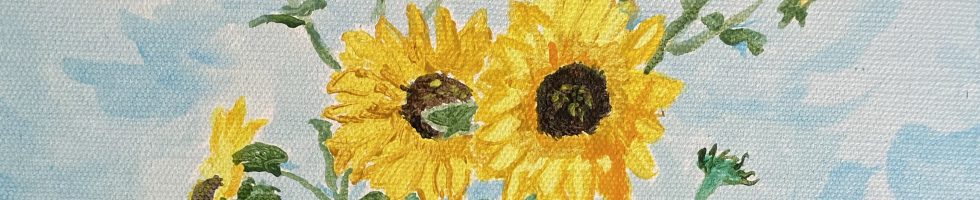
Two poems published in MLM Anthology: Broken Spades

Two of my poems, “Gob-smacked” and “The Smell of Wet Pavement” are now available in Midwest Literary Magazine’s latest print anthology, Broken Spades.. Check it out at: http://midwestliterarymagazine.com/books/

Blank Hours

My cat – in playing-dead position, marble eyes rolled back – murmurs like a dreamer. Does she dream herself the prey in some exciting chase? Or is the fluttering of her eyes and the quivering of her lips merely a physical reflex?

The 22-year old man-child sits on the floor, dressed up in a sweater and tie. The camera stays on him for a painfully long time. He was born deaf and blind. No one ever tried to awaken him, or even teach him how to walk. He doesn’t dress himself. Is he capable of abstract thinking? When he spits and drools and slaps his cheek, is this a form of language, or merely a physical reflex?

With one leap, the philosopher throws himself from his window. Perhaps death’s delay is too much to take, and after years of deliberation in everything else, he is driven to literally take the leap.

If he prayed, he would pray: Shall I like most, die when death takes a hold of me, suddenly, or preconceived? We owe one death each. Should we not have some say about the time to pay?

Do not be sad when death arrives. Welcome and accept it, rather than revolting like a spoiled child.

The man-child can’t help spitting and dribbling.

There are worse things than death – you’ve seen. Like watching someone offer up more than the one death he owes, an unwelcome generosity.

Hand him a banana and he’ll consume it instantly, without mashing it between his fingers. He can never think up a tree, but he can feel one with his hands and climb up one with his feet without knowing it’s a tree.

If the 22-year old man-child could pray: What is this constant buzzing sound in the back of my head? Please make it stop, and if you do, I’ll stop slapping and scratching and crawling on all four of these things you call feet.

Trapped in a one-lunged body, the philosopher suddenly leaps out the window. They say it was a reflex, after several years of struggling with painful breathing and living. The physical body can only take so much.

He had no time to think.

I wonder what my cat now awake, and the man-child now asleep dream about in the blank hours.

The Return (A Flash Fiction Piece from Myths & Meditations)

Little Anna’s hands are chubby like those of a cherub. She has never seen an angel, but if she did, it would not strike her as any different than pigs that walk erect, or wolves who prefer to wear granny clothes rather than to prowl about naked in the night. Despite her chubby little fingers that have difficulty grasping, Little Anna is in the habit of grabbing her companions by the hand into one adventure or another.

Just because Little Anna has the hands of an angel doesn’t mean she is an angel. She is a human child: four feet in height and round at the belly. Her soft, fine hair is corporeal, and so is the lilt in her step. She understands nothing of the word “innocent,” since the adults around her only think it when they see her, but never pronounce the word aloud.

When Little Anna meets Peter the Pig, she mistakes him for a dog. Outside of his brick house, which has grown cold and enormous without his two brothers, he crouches on all fours, digging a hole to bury their remains. By instinct rather than choice, his tail wags back and forth like that of a dog. Little Anna can’t resist tugging the wagging tail. This behavior is not a sign of mischievousness, but a desire to give and receive affection. This, in fact, is what Little Anna does on a daily basis to her pet Kitty. She tugs Kitty gently by the tail, till it rounds its back coyly, flips over and begs to be scooped up in her arms. She then rocks Kitty in her arms tightly, (but not too tight) and coos and caws. In this way, Little Anna makes up for any lack of human affection. Therefore, when she sees the tail wag, she can’t resist. She wants this pig, (which she mistakes for a dog), for her very own pet. It is only when the pig stands up erect that Little Anna realizes he is not so little after all. Peter the Pig stands one inch taller than she; a little pig compared to hogs, but not compared to Anna. So Little Anna refrains from calling him Little Piggy, and calls him Peter instead. He shakes off the dust from his hooves and holds one out to greet her. He doesn’t mind that Little Anna calls him Peter, since names have no meaning to him one way or the other. Though he initially thinks it odd that she calls him Peter instead of Pig, he swiftly dismisses the notion and allows her to take him by the hoof. Besides, he has done his duty as the sole surviving brother, is ready to stride in the warmth of the sun, and is pleased to make a new acquaintance.

In the meantime, Little Anna’s pet Kitty, whom she left behind in her last adventure, is gnawing at the walls of candy and cake, partly out of boredom, and partly out of dismay. Without anything or anyone to play with, Kitty regrets having given Mouse back his tail, because once he plugged it back in he scurried away into the nearest crevice. Kitty prefers licking the walls of candy and cake over nibbling on the crumbs of gingerbread – the gingerbread crumbs left behind by Little Anna’s greedy hands, the hands that grab, grab, grab.

And while Kitty’s tongue grows raw, red, and cracked from all this licking, Mouse tunnels his way from Gingerbread Land. He tunnels away until he’s under the muddy, soggy earth. The muddy, soggy earth trampled upon by Nephilim feet. The Nephilim birthed by angels and whores.

When frolicking about in this Ancient world, Little Anna had seen neither angels nor whores, who cavorted in dim caves and caverns. But she often spotted Nephilim on the backs of ancient turtles or climbing magnificent trees. One day, the booming stampede of these great big giants sent Little Anna whirling away from this world of old into the dark, dark forest, where she took the hands of a brother and his sister on into gingerbread land.

Little Anna has only a vague remembrance of the world of the Nephilim, perhaps because her little brain has no room for such great big memories. However, she remembers clearly the little picture books read to her while sitting on her mother’s lap. Whether golden eggs or little red hens, great big giants, or gingerbreads, they still fill her with wonder. There has always been something familiar about these stories, even when read to her for the very first time. That is why even if Little Anna should someday see an angel for the very first time, she will neither wince nor cry.

Little Anna and Peter the Pig hold hands now, skipping down a foggy bridge over a canal. Though she has never seen a canal before this, Little Anna is filled with recognition. She and Peter sigh in wonder, something like the first breath that must have been taken by the first humans.

Publication Bulletin: Read my latest published poetry!

Two of my poems, “Gobsmacked,” and “The Smell of Wet Pavement” have just been published at Midwest Literary Magazine. Please click on the link and have a read. I’m on pages 52 & 53 of the August issue. Cheers!
http://midwestliterarymagazine.com/archives/

Slumber Citizens (Excerpt from Chapter 5)

Slumber Citizen 01122 discovered 01097 during his lunch break. He had forgotten to bring his regular sack lunch consisting of a peanut butter and jelly sandwich and a carton of low fat milk. So he took the elevator downstairs and made the short walk to the deli around the corner. She got in line just ahead of him. She wore a salamander-colored scarf double-twisted around her neck in a loose knot with the stringy fringes cascading over her shoulders. It looked as if her hair had been combed in a hurry without the benefit of a mirror. He shifted his eyes to the large menu behind the counter, arrayed with item descriptions color-coded in chalk, but then his gaze returned to complete the picture: bronze hair loosely bound with a barrette, large handbag made of upholstery material, resembling a carpetbag. He couldn’t see her face, but silently admired her stance, the way she allowed one handle of the bag to hang off her shoulder, her right hand holding the other in place, left hand resting on her waist. He caught a whiff of newly washed hair, sweet and clean.
When it was his turn to order he watched as she took her sandwich to the nearest table, the one by the display rack of chips. He observed the pointed tip of her nose, and the general landscape of her face. It was his turn to order and he felt beads of sweat forming under his collar because he hadn’t yet decided what to order from the dozens of looming choices, undecipherable in his muddled head.
“The Greek is delicious,” he heard someone say from behind him. She kicked her right foot back and forth as she licked mustard off of her finger. “Yeah?” was all he could muster as the items on the menu finally came into focus. He turned back to look at her, taken aback by her stare. “What’s all in it?” he asked dumbly, “I mean in the sandwich special – the Greek?” Placing her sandwich on the plate as she swallowed, she offered, “Come look.” Hesitantly, he ducked as if the ceiling was too low and walked over. She opened up her sandwich and displayed the meats, cheese and lettuce, half eaten. “Ah,” he answered, “looks good,” and returned to the counter, placing his order for the Greek.
She shared her small round table in the corner with him. She rattled off about each ingredient in the sandwich, the exact arrangement of the meats, vegetables and the type of bread. She was on fire about the deli sandwich, and how this specific arrangement happened to affect the taste. She sipped her root beer in between bites and snippets, as he took long swigs of orange juice. She told him that she worked at the Trader Joe’s down the street. See you again, maybe, she said. And he agreed.
During the long stretch of late afternoon and evening that day, all of Citizen 01122 got trapped inside of his mouth:
Top teeth mounted over bottom with tongue stuck in between. Top teeth overbear bottom so must push chin forward for relief. All of me trapped inside this contraption. I’ll never escape. I can never be free.
These are the waking day symptoms of nightmare – the kind you don’t share with anyone else because they stand outside the structure of your disease.
He didn’t take these symptoms as an effect of his brush with Citizen 01097, nor did he take them as the effect of a previous nightmare. He lived through them and hoped they wouldn’t return.

Previous Older Entries Next Newer Entries