On the Stupidity of Literary Prizes

Early on in my MFA years, I spent quite a bit of energy, resources, and time searching for writing contests, hoping against all hope that I would win and finally get the affirmation that I desperately sought–affirmation of my right to call myself a writer. Contest fees aside, I agree with the the writer’s critique of literary prizes at Overland, even though he focuses on the Australian literary scene:

https://overland.org.au/2019/08/and-the-winner-isnt-on-the-inherent-stupidity-of-literary-prizes/: On the Stupidity of Literary Prizes

The same principles apply to the industry of literary prize seeking and giving. The writer does recognize a few advantages of literary prizes, such as increased sales and prestige, but there is no guarantee, and when it does happen, it only happens to a very small number. The list of what literary prizes are bad at is longer, and I quote:

“But prizes are also very bad at many important things, such as:

  • encouraging substantive criticism, analysis, or discussion of books;
  • engaging with or providing a sense of literary history;
  • generating useful, defensible, or coherent literary traditions.”

Indeed, I know that when I see the winner of a literary prize, I don’t often think about what makes a book a “winner”: “prizes often present a mark of quality that ‘compels us to entertain the idea that this novel’s distinction should be regarded universally to be true.”

Can a book ever be objectively, universally “good”?

I especially appreciate this next point: “How many historically ‘great’ works of fiction were recognised as such upon publication or even shortly after? The answer, as we know, is very few; many ‘great’ novels – like Moby Dick – are effectively rediscovered decades after their original publication. Contemporaries are very bad at judging what books are likely to stand the test of time, and even prizes like the Nobel Prize in literature are as famous for the living writers who didn’t win (James Joyce! Virginia Woolf! Leo Tolstoy! Clarice Lispector!) as those who did.”

I can add many more to this list of ‘losers’: Jorge Luis Borges, Murakami…

Let’s also not forget another bad/stupid thing about writing contests, and that’s the fees; most if not all require some kind of a fee to enter their contests. This requirement automatically bars individuals who are hard up from being considered.

I used to spend a lot of time as a fledgling writer searching for validation of myself as a writer, whether through just sending my work out for acceptance or publication, acquiring an agent, and most of all, entering contests. I actually did win a small poetry press contest over ten years ago, but then they ended up folding before they could publish my chapbook as the reward. My creative nonfiction thesis, which turned into my first book, was longlisted for the Steel Toe Book Prize in 2021. Of course, it felt good to get some recognition, hey look at me, I made it (or rather my book did) to the long list of possible-winners. But when it comes to recognition, it cuts both ways. I also paid to get a review of my second book, Giving Up the Ghost, from Kirkus Reviews, but when the review turned out to be lukewarm, very brief and disappointing, I obviously declined using it to promote my book and there down the drain went 500 bucks. I’m still embarrassed thinking about how I forked out that much, confident that the reviewer would at least like my book. In thinking upon the state of the literary scene, I’ve decided that instead of seeking external validation when it comes to my writing and art, to continue to do what I’ve always done, and that is seeing the process of creation as a vehicle for learning and growing, and just Being.
Art Exhibit “Small Wonders”

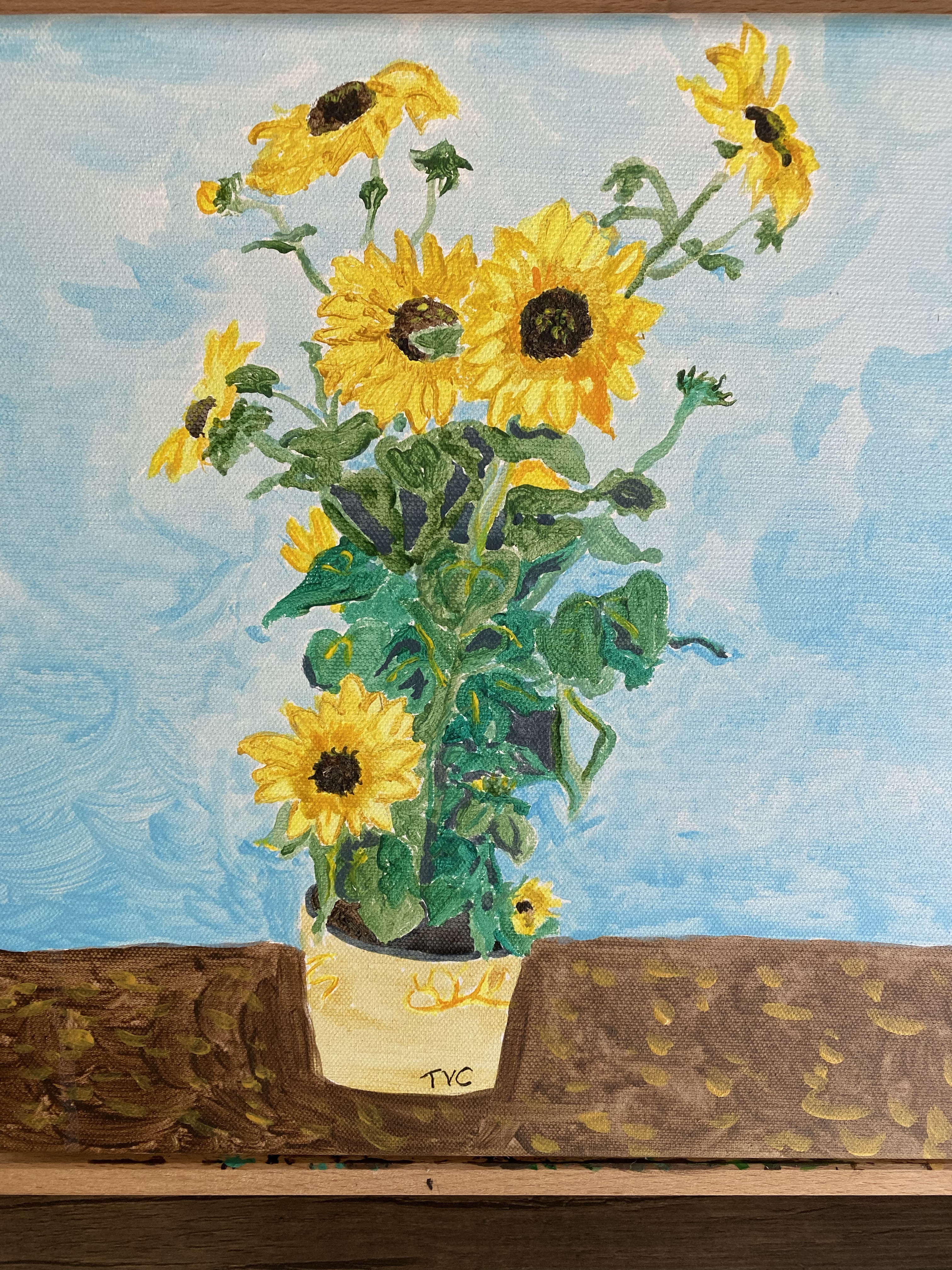
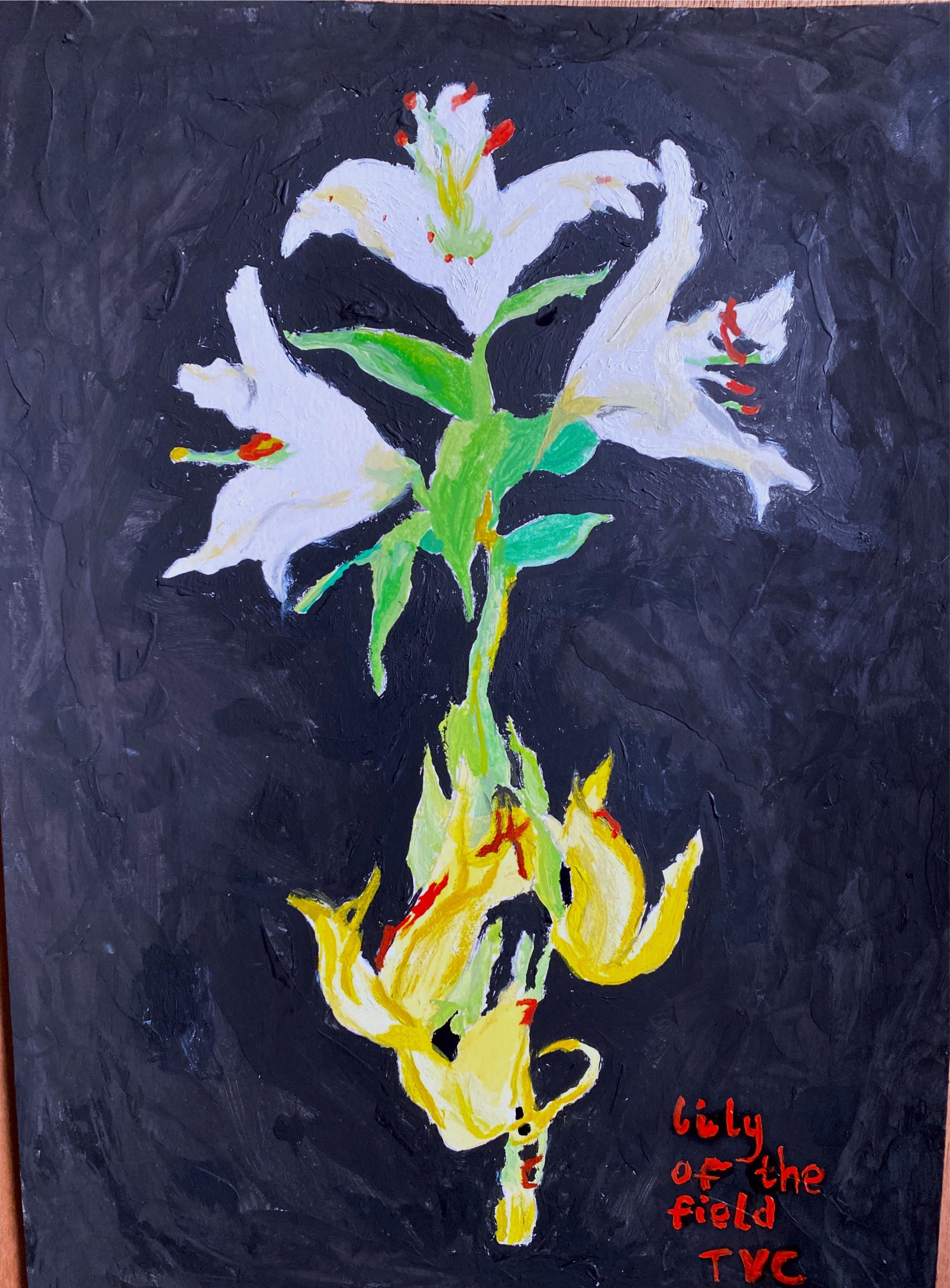
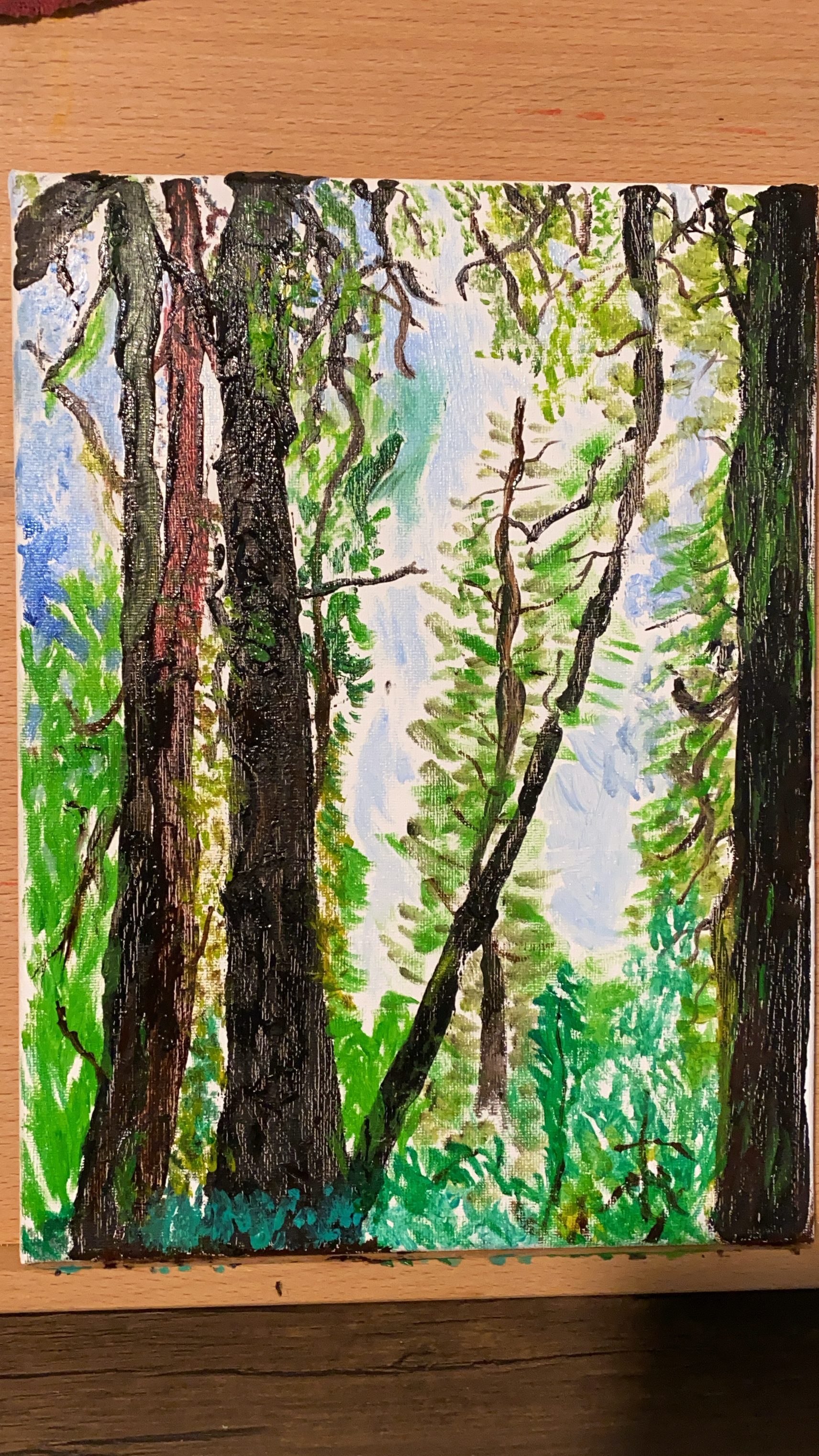
Three of my paintings have been accepted to the December “Small Wonders” exhibit at Art at the Cave in downtown Vancouver, WA. Join us for First Friday Artists’s Reception from 4 to 8 PM on Friday, December 1st.

This will be my second art exhibit.

https://artatthecave.com/

Hiroshima, Burning

Hiroshima, Burning

Have you anything to drink? (watercolor)

Ever since watching Christopher Nolan’s Oppenheimer a couple of weeks ago, I have been preoccupied with the atomic bombing of Hiroshima and Nagasaki. In my research, I came upon John Hersey’s essay “Hiroshima,” first published in The New Yorker. He bears witness to the memories of a handful of survivors, removing himself completely from accounts; it is one of the best pieces of journalism I’ve read. I also checked out the volume Hiroshima’s Shadow from the library, a collection of essays that wholly knocks down the myths about Hiroshima that still today persist, such as that the atomic bombs had to be dropped to end the war and that Japan would not surrender otherwise.

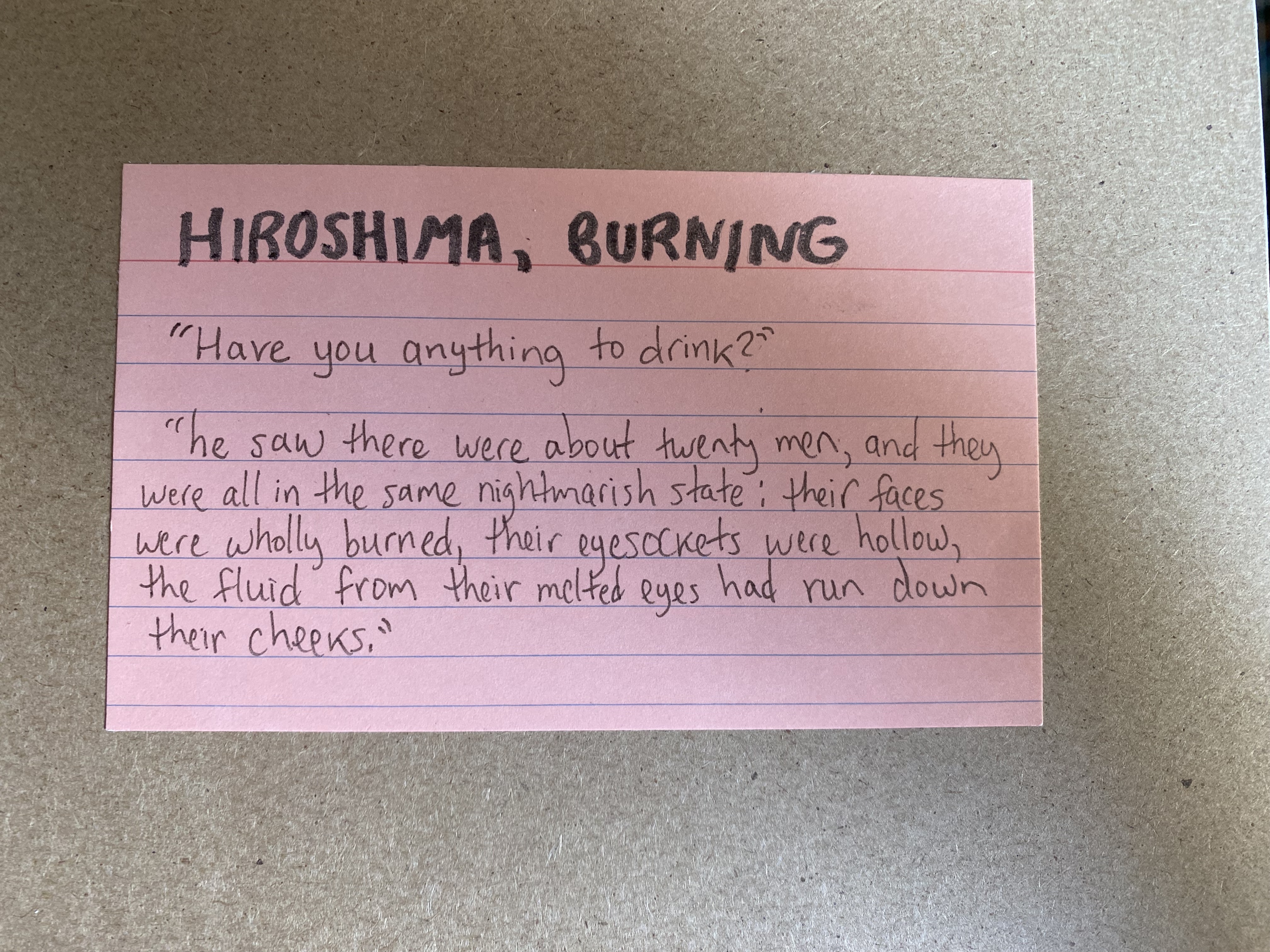
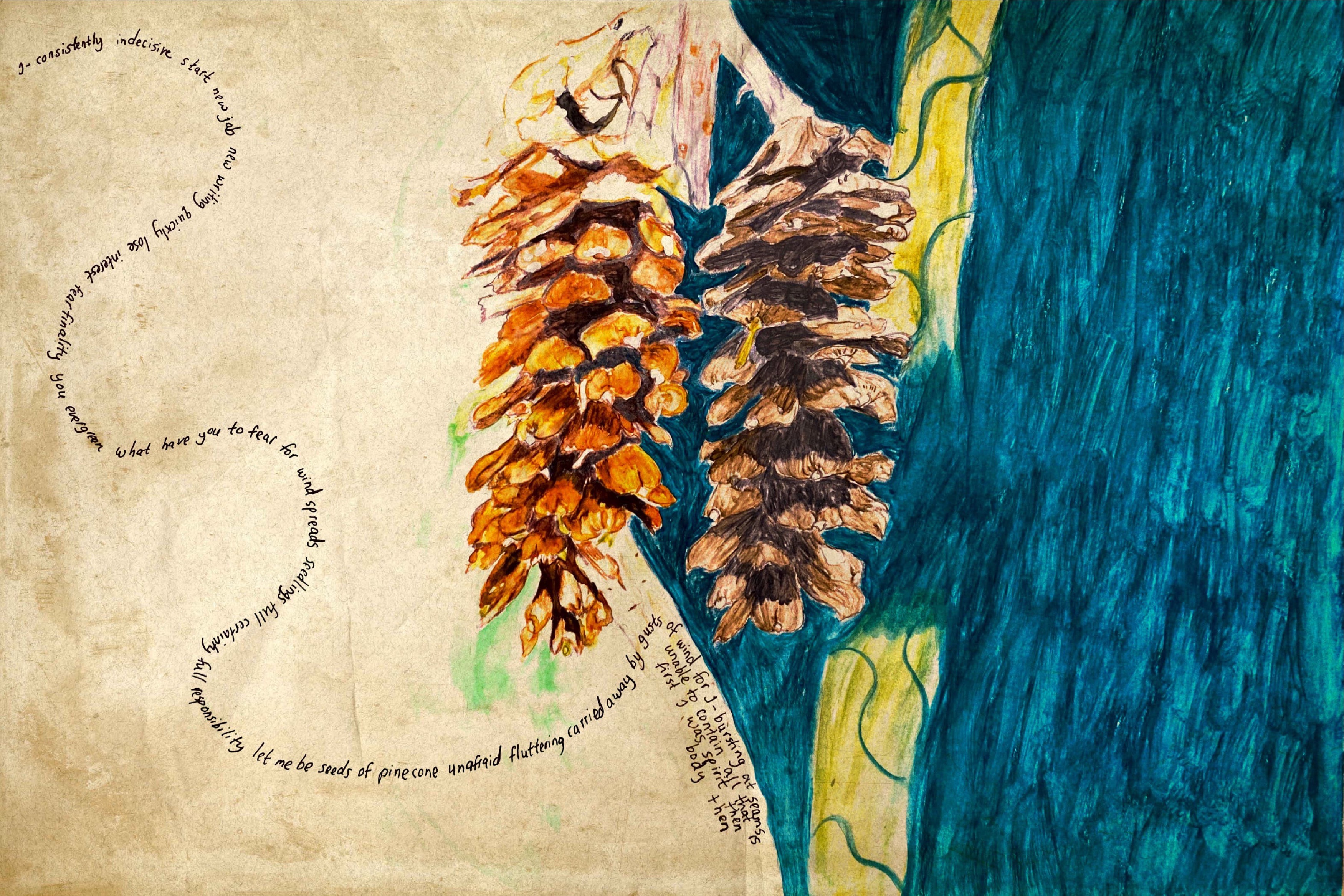
I have the tendency to be melancholic, hyper-empathetic and hyper-sensitive, and dealing with this horrid part of our history as Americans is no different. The way I deal with feelings of despair is either by writing or drawing/painting, or both, and so I am in the planning stages of a series of pieces inspired primarily by John Hersey’s account tentatively titled “Hiroshima, Burning.” Here is a very preliminary sketch:

Father Kleinsorge, on his way back from fetching water to help the wounded, heard a voice say, “Have you anything to drink?” And discovered about twenty soldiers in a nightmarish state of faces wholly burned, eyesockets hollowed, and fluid from their melted eyes running down their cheeks. He said their faces must have turned upward when the bomb went off.”

I can’t even begin to articulate the horror I feel when reading all of these accounts from survivors, the immense evil unleashed at the hands of human beings upon other human beings. And so I let my art speak. Sometimes I feel like a fraud for making art rather than taking action that would really change things. But it’s all I am capable of for now.

The Absent-Minded Reader

Latest Entry for The Social Book Exchange

https://tinacabrera.substack.com/p/the-absent-minded-reader?sd=pf: The Absent-Minded Reader

Avatar Author (Living, Dead, and Dread)

Check out this week’s post of The Social Book Exchange

https://tinacabrera.substack.com/p/avatar-author?sd=pf: Avatar Author (Living, Dead, and Dread)

← Back

Thank you for your response. ✨

The Social Book Exchange

Survey Part 2

https://tinacabrera.substack.com/p/survey-part-2?sd=pf

The Measure of My Melancholy Panel 4

Substack

This week’s entry of The Social Book Exchange at Substack: https://open.substack.com/pub/tinacabrera/p/about?r=k5a25&utm_medium=ios&utm_campaign=post

Check out this week’s posting: “From One AI to the Next (The Proposal)”

https://tinacabrera.substack.com/p/from-one-ai-to-the-next?sd=pf: Substack

Substack Newsletter

Check out my new newsletter devoted to my novel-in-progress, The Social Book Exchange.

https://tinacabrera.substack.com/p/the-inspiration?sd=pf

In All My Lifetimes

Edited version now available for sale at Blurb.

Tina V. Cabrera's avatarThe Hungry Artist

Five individuals find themselves in the Bardo at the same time, in the Interim, the space between dying and rebirth. They converse with one another and with the ghosts of their memories at turns: Venerable Arhat (the guide), Unnamed (a narwhal), Edna a would-be animal activist, Bert the Philosopher, and Maria Concepcion, who suffered abuse at the hand of a family member in her previous life. Thefive ‘travelers’ have up to 49 days in the Interim, to processthrough the three stages of the Bardo to realize their fate in the direction of their Karma. Will they resist or come to peace with the manifestation of their fate? Is their fate set in stone, or is there room in the Interim to overcome doubt and finally end the cycle of suffering?

Order book at Blurb:

https://www.blurb.com/b/11294254-in-all-my-lifetimes

View original post

Previous Older Entries Next Newer Entries